.png)
How Long Does a Vasectomy Take? Procedure Time, Recovery, and What to Expect

One of the first questions I hear from men considering a vasectomy is surprisingly simple: "How long does a vasectomy take?"
It's a fair question. By the time most men come to see me, they've usually spent weeks, months, or even years thinking about the decision. They've read stories online, talked with friends, and wondered what the procedure is really like.
The good news is that the vasectomy itself is much quicker than most people expect.
For most men, the procedure takes about 15 to 20 minutes, while the entire appointment usually lasts around 45 minutes to an hour. Since it's performed using local anesthesia in an outpatient setting, you'll go home the same day.
Of course, the clock only tells part of the story.
Knowing what happens before the procedure, what recovery actually looks like, and what to expect over the following weeks often makes the entire experience feel much less intimidating. That's exactly what I hope to help you understand here.
If you're curious about how the procedure itself works, I've explained the process in more detail on my No-Scalpel Vasectomy in Eugene, Oregon page.

Why So Many Men Put Off a Vasectomy
If there's one thing I've learned over the years, it's that most men don't delay a vasectomy because of the procedure itself. They delay it because of what they imagine it will be like.
Some worry about pain. Others wonder whether it will affect their testosterone, sex drive, or masculinity. Many simply aren't sure they're ready for a permanent decision.
Those concerns are completely normal. In my experience, the anticipation is often much more stressful than the procedure itself. Once we've had a chance to talk through your questions and explain what to expect, many of those fears begin to fade.
One of the most common things I hear afterward is, "I spent a lot more time worrying about it than I needed to."
That's why I see a consultation as an opportunity to give you clear, honest information, not to convince you to move forward. The decision should feel informed, comfortable, and right for you.
What Actually Happens During the Procedure?

Although the procedure itself is relatively quick, you can expect to spend around an hour at the clinic. That gives us time to answer your questions, perform the procedure carefully, and make sure you leave knowing what to expect during recovery.
Before We Begin
When you arrive, we'll review your medical history, confirm your consent forms, and answer any last-minute questions. Then we'll prepare the treatment area and use a local anesthetic to numb the area. Most men describe the injection as a brief pinch, and once it's takes effect, the rest of the procedure is usually much more comfortable than they expected.
During the Procedure
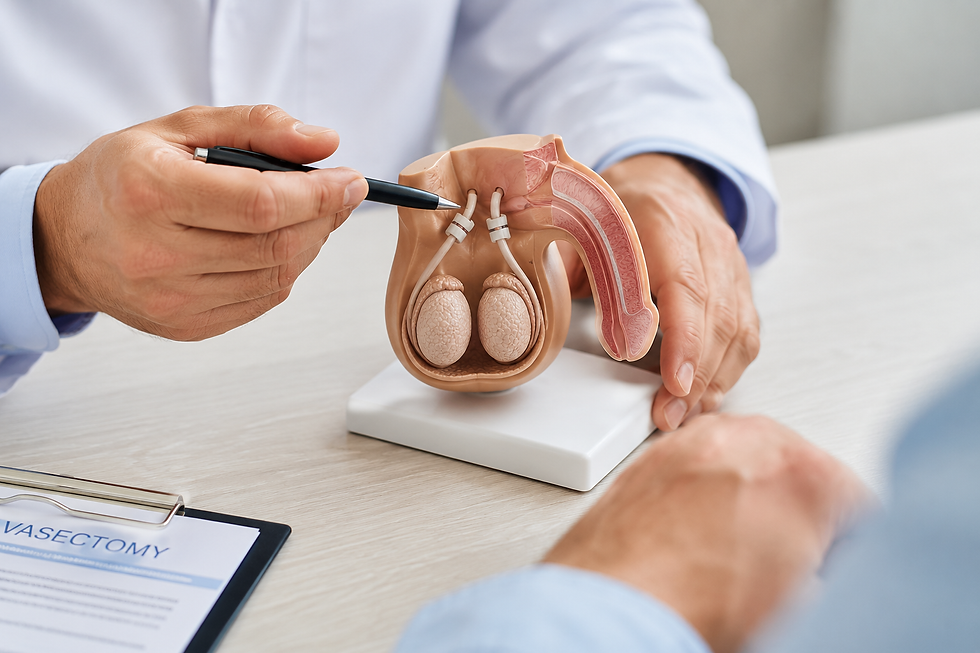
Using the no-scalpel technique, I create a tiny opening instead of a traditional incision to access the vas deferens, the tubes that carry sperm from the testicles. I then carefully seal those tubes to prevent sperm from entering the semen. Because the opening is so small, stitches often aren't necessary.
You'll remain awake throughout the procedure, and I'll check in with you along the way to make sure you're comfortable from beginning to end.
If you'd like a closer look at what actually happens during the procedure, I've also written a guide explaining what a no-scalpel vasectomy is and how it differs from traditional techniques.
Before You Head Home
Before you leave, we'll review your recovery instructions, including when you can return to work, exercise, and sexual activity, how to manage swelling and discomfort, and when to schedule your follow-up semen analysis.
Before you leave, we'll also schedule your follow-up semen analysis. Until that test confirms there are no sperm remaining, you'll need to continue using another form of birth control.
How to Prepare for Your Appointment

Fortunately, preparing for a vasectomy is fairly straightforward.
There isn't a long list of things you need to do, but a little preparation can make your procedure and recovery much more comfortable.
Here's what I typically recommend.
Follow Your Pre-Procedure Instructions
Every practice has slightly different instructions depending on the procedure and your medical history.
If I've asked you to trim or shave the treatment area beforehand, try to do that the evening before your appointment rather than rushing the morning of.
If you're taking blood thinners or certain medications, we'll discuss whether any temporary adjustments are needed before your procedure.
Wear Comfortable Clothing
Choose loose-fitting pants or athletic shorts for your appointment.
More importantly, plan to wear snug, supportive underwear rather than loose boxers.
That extra support helps minimize movement after the procedure and often makes those first couple of days much more comfortable.
Plan for a Quiet Afternoon
Although the procedure itself is short, I encourage patients to keep the rest of the day as light as possible.
Think of it as giving your body permission to recover.
Most men spend the afternoon relaxing on the couch with an ice pack, watching television, reading, or catching up on a favorite show.
It's one day that's worth slowing down.
Have a Few Supplies Ready at Home
Before your appointment, it's helpful to have a few things waiting for you at home:
Ice packs or reusable cold packs
Supportive underwear or an athletic supporter
Acetaminophen or another pain reliever if recommended
Comfortable clothes
Easy meals or snacks so you don't have to cook
Having everything ready ahead of time means you can simply go home and focus on resting.
Arrange Transportation If Needed
Because the procedure is performed using local anesthesia, many men are able to drive themselves home. However, depending on your individual situation, I may recommend arranging a driver.
That said, if someone is available to drive you, it's often a more comfortable way to start your recovery.
We'll discuss what's best for your individual situation before your appointment.
If you're still deciding whether this procedure is right for you, it may help to think through some of the questions I encourage patients to consider before scheduling.
Why the No-Scalpel Method Changes the Experience

Many men ask whether a no-scalpel vasectomy takes less time than a traditional vasectomy. In most cases, the procedure takes about the same amount of time. The difference isn't how long it takes. It's how the procedure is performed.
Instead of making small incisions, the no-scalpel technique uses a tiny opening to access the vas deferens. Because there's less disruption to the surrounding tissue, many men experience less bleeding, bruising, and swelling during recovery.
Traditional Vasectomy | No-Scalpel Vasectomy |
Small surgical incisions | Tiny opening instead of incisions |
Stitches may be required | Stitches often aren't necessary |
Slightly more tissue disruption | Less tissue disruption |
Recovery may take a little longer | Many men experience less swelling and bruising |
Every patient is different, so I recommend the approach that's safest and most appropriate for your anatomy and medical history. Many of my patients also ask why the no-scalpel approach has become the preferred option and whether their nerves before the procedure are normal. The answer is almost always yes.
Recovery: What to Expect After Your Vasectomy
Recovery is usually more straightforward than most men expect. You'll head home the same day with a few simple instructions, and the biggest key to a smooth recovery is giving your body enough time to heal, even if you're feeling better after a day or two.
The First Few Days
Plan to rest during the first 24 hours. Wear supportive underwear, use ice packs as directed, and take over-the-counter pain medication if needed. Most men describe the discomfort as mild soreness rather than significant pain.
By the second or third day, many men feel well enough to return to desk work or other light activities. If your job involves heavy lifting or physical labor, you may need a little more time.
The First Week
Avoid strenuous exercise, heavy lifting, running, cycling, and contact sports during the first week. Light walking is fine if you're comfortable, but try not to rush back into your normal routine before your body is ready.
Your Follow-Up Semen Analysis
Even if you're feeling back to normal within two to three weeks, continue using another form of birth control until your follow-up semen analysis confirms there are no sperm remaining.
That final test confirms your vasectomy has been successful.
Is a Vasectomy Right for You?

A vasectomy is one of the most effective forms of permanent birth control available.
That doesn't automatically mean it's the right choice for everyone.
During consultations, we spend just as much time talking about your goals as we do talking about the procedure itself.
In general, a vasectomy may be a good option if you:
Feel confident your family is complete
Want a reliable, long-term form of birth control
Prefer a one-time procedure rather than ongoing contraception
Understand that a vasectomy should be considered permanent
On the other hand, you may want to slow down and think things through if you:
Aren't sure whether you want children in the future
Feel pressured by someone else to have the procedure
Have unanswered questions about how a vasectomy might affect your life
There's nothing wrong with taking more time. In fact, I'd rather you postpone the procedure than move forward with uncertainty.
If you're still weighing your options, you don't have to make that decision alone. A consultation gives us the chance to talk through your questions, discuss your goals, and help you decide whether a vasectomy is the right choice for you, without any pressure to move forward before you're ready.
Why Men Choose Morgan Men's Health for Vasectomy in Eugene, Oregon
A vasectomy may take less than half an hour, but deciding to have one often takes much longer. That's why I never believe patients should feel rushed into making a permanent decision.
At Morgan Men's Health in Eugene, Oregon, some of the most important parts of your appointment happen before the procedure begins. We'll discuss your medical history, your family planning goals, and any questions or concerns you have so you feel comfortable with every step of the process.
No two patients are exactly alike. Over the years, I've cared for men with different anatomy, previous surgeries, and unique concerns that require individualized care. My goal is to make sure you leave feeling informed, comfortable, and confident in your decision.
My role isn't to persuade you to have a vasectomy. It's to give you clear, honest information so you can decide whether it's the right choice for you. If you decide now isn't the right time, that's okay. My goal is to help you make the decision that feels right for your life and your family.
Talk to Dr. Morgan Before You Decide
If you've been thinking about a vasectomy and still have questions, a consultation gives us the opportunity to discuss your concerns, review your options, and make sure you have the information you need to make a confident decision.
There's no pressure to move forward that day. My goal is simply to help you understand your options so you can decide what's right for you.
Whenever you're ready, I'd be happy to help. If you'd like to talk through your questions or schedule a consultation, you can contact Morgan Men's Health to get started.
Frequently Asked Questions
How long does a vasectomy take? The vasectomy procedure itself usually takes about 15 to 20 minutes, while your entire appointment typically lasts 45 minutes to an hour. That includes check-in, preparing for the procedure, local anesthesia, the vasectomy itself, and time to review your recovery instructions before you head home.
Can I drive myself home after a vasectomy? Many men are able to drive themselves home after a vasectomy because the procedure is performed using local anesthesia rather than general anesthesia.
That said, if someone can drive you home, it's often the more comfortable option. If you've taken medication that could affect your ability to drive or you're feeling sore or lightheaded after the procedure, arrange for someone else to take you home. We'll discuss what's best for your individual situation before your appointment.
Can I eat before my vasectomy? Yes. Because a vasectomy is performed using local anesthesia rather than general anesthesia, most patients can eat normally before their appointment.
If your medical history or treatment plan requires different instructions, I'll let you know before your procedure.
How should I prepare for my vasectomy? Preparing for a vasectomy is simple, but a few steps can make your procedure and recovery more comfortable.
Before your appointment, follow any grooming instructions we've provided, wear snug, supportive underwear, and plan to keep the rest of your day free so you can go home and rest. If someone is available to drive you home, that's often the most comfortable option. A little preparation beforehand can make recovery much smoother.
Does insurance cover a vasectomy in Oregon? Many private insurance plans and the Oregon Health Plan (Medicaid) cover vasectomy, but coverage varies depending on your specific plan.
Before scheduling your procedure, it's always a good idea to contact your insurance provider to confirm your benefits, determine whether a referral or prior authorization is required, and understand any out-of-pocket costs.
How soon can I exercise after a vasectomy? Most men should wait about one week before returning to strenuous exercise. Light walking is usually encouraged within the first day or two if you're comfortable, but running, cycling, weightlifting, and contact sports should wait until you're healing well. If you're unsure whether you're ready to return to exercise, I'd rather you ask than risk slowing your recovery by doing too much too soon.
Comments