.png)
Low Testosterone vs Normal Aging: How Men Can Tell the Difference
- Jul 6
- 9 min read
By Dr. Kelly Morgan, Board-Certified Urologist | Morgan Men's Health, Eugene, Oregon

You still get through the day, but something feels different.
Maybe your energy is lower than it used to be. Maybe your sex drive has changed. Maybe workouts feel harder, sleep does not feel as refreshing, or your mood and focus are not quite the same.
At some point, the question becomes difficult to ignore:
Is this just normal aging, or is something actually off?
A lot of men who come into my clinic ask me what the most common signs of low testosterone actually are. Lower sex drive, fatigue, mood changes, loss of muscle, trouble concentrating. Those are the ones that come up most. But here is what I tell every one of them: those symptoms are real, and they are also shared by about a dozen other things.
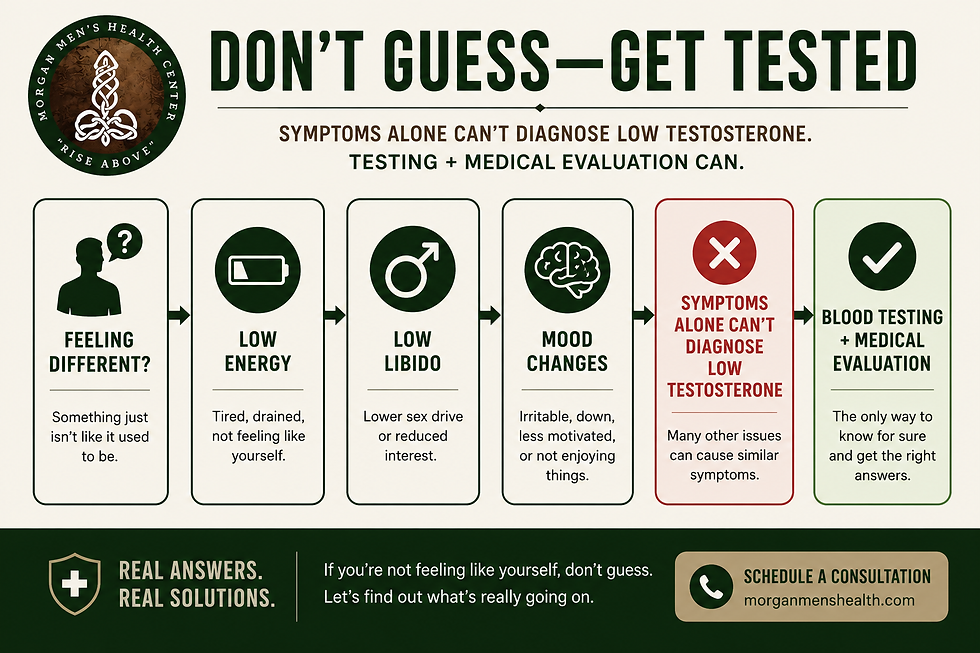
So the signs alone are not your answer. Testing is.
However, for many men, that question leads to quiet searching first instead of calling a medical professional. Low testosterone comes up quickly online. That could be a cause, but it is not always the answer for every patient I talk to about this. Some changes can happen with age. Stress, poor sleep, weight changes, medications, alcohol, depression, diabetes, thyroid issues, and other health factors can also cause symptoms that look similar to low testosterone.
So how can you tell exactly what is going on, what the cause is, and when to see a doctor about it? Here is what we are going to cover:
Why symptoms alone cannot confirm low testosterone and what actually can
What low testosterone feels like and how it overlaps with normal aging
The key differences that matter and why testing is the only way to know
When to get checked and what a proper evaluation looks like
What happens if testosterone is actually low
The important thing to know is this: symptoms alone cannot confirm low testosterone. A proper evaluation looks at how you feel, what else is going on with your health, and whether blood testing actually shows low testosterone.
If you feel different and cannot explain why, you do not have to guess. Your urologist or GP can run a few simple tests that can help clarify whether testosterone is part of the picture or whether something else may be contributing.
Some Changes Can Come With Age, But Not Everything Should Be Ignored
Aging will bring gradual changes. Energy will shift. Recovery will take longer. Muscle will become harder to maintain. Sleep patterns can change. Sex drive may not feel exactly the same as it did years ago. You are probably experiencing at least one of these right now.
That does not mean every change you are seeing in your health should be brushed off as just getting older.
If these symptoms are new for you, persistent, worsening, or affecting your confidence, relationship, work, sex life, or quality of life, it is reasonable to ask better questions. The goal is not to assume something is wrong. The goal is to stop guessing. So when should you consider low testosterone as a cause?
Low testosterone is one possible explanation for certain symptoms, but it is not the only one. That is why the difference between low testosterone vs normal aging is the first thing I discuss with my patients. Here is what you should look for.

What Low Testosterone Can Feel Like
Low testosterone can affect you in different ways. Some men notice sexual symptoms first. Others notice changes in energy, mood, strength, or body composition.
Possible symptoms include:
Lower sex drive
Erectile concerns
Low energy
Fatigue
Mood changes
Irritability
Reduced motivation
Loss of muscle mass or strength
Increased body fat
Poor concentration
Sleep changes
Lower sense of well-being
Are you experiencing several of these? This can be frustrating because what you are feeling is real, but these are not exclusive to low testosterone. Low energy does not automatically mean low testosterone. Lower sex drive does not always mean a hormone problem. Mood changes, poor sleep, or reduced strength can have several possible causes.
That is why I always tell men to treat these symptoms as signals, not a diagnosis. So now you are probably wondering, what symptoms do point to low T?
If your symptoms involve low libido, erectile concerns, fatigue, or changes in strength, then I perform a low testosterone evaluation to determine whether hormone shifts are a root cause.
Why Symptoms Alone Are Not Enough
Low testosterone and normal aging can overlap. So can low testosterone and stress. Low testosterone and poor sleep. Low testosterone and depression. Low testosterone and medication side effects.
That overlap is exactly why self-diagnosis can be misleading.
You may feel tired because testosterone is low. You may also feel tired because you are sleeping poorly, drinking more alcohol than usual, under heavy stress, carrying extra weight, dealing with an underlying health condition, or taking medication that affects energy or sexual function.
The same is true for sex drive and erections. Low testosterone can contribute to sexual health changes, but erectile dysfunction can also involve blood flow, anxiety, diabetes, high blood pressure, medication effects, alcohol use, sleep problems, or other urologic concerns.
The guidelines I follow are clear that low testosterone should not be diagnosed from symptoms alone. The Endocrine Society recommends diagnosing hypogonadism only when men have symptoms or signs consistent with testosterone deficiency and consistently low testosterone levels on testing. It also recommends against routine screening of all men without a clinical reason to test.
The American Urological Association uses a total testosterone level below 300 ng/dL as a reasonable threshold in support of a low testosterone diagnosis, but that number still needs to be interpreted alongside symptoms and clinical context.
In plain terms, you cannot reliably tell the difference between low testosterone vs normal aging from symptoms alone. Testing and a proper evaluation help determine whether testosterone is actually low and whether it fits what you are experiencing.
Low Testosterone vs Normal Aging: What Differences May Matter?
The difference is rarely obvious from one symptom. What matters is the pattern, how long it has been going on, how much it affects your life, and what testing shows.
What You Notice | Could Be Normal Aging | Could Be Low Testosterone | Why Evaluation Helps |
Lower energy | Gradual slowing, busier life, poorer sleep | Persistent fatigue with other hormone related symptoms | Helps check hormones and other possible causes |
Lower sex drive | Can shift with age, stress, sleep, and relationship factors | Noticeable or persistent drop in libido | Helps separate hormone, stress, erectile, and medication factors |
Muscle or strength changes | Some decline can happen with age or lower activity | More noticeable loss of strength or lean mass | Helps assess testosterone, activity, nutrition, and broader health |
Mood or motivation changes | Life stress, sleep changes, and aging transitions can contribute | Irritability, low motivation, or lower sense of wellbeing | Helps identify whether hormones are part of a larger issue |
Erectile concerns | More common with age | May overlap with hormones, blood flow, stress, medication, or health conditions | Helps determine whether erectile dysfunction, testosterone, or another factor is involved |
This is why an evaluation matters. It keeps the focus on what is actually happening in your body rather than assuming every symptom is either aging or testosterone.
When Should Men Get Checked for Low Testosterone?
You do not need to wait until symptoms become severe before asking questions.
It may be worth getting checked if changes in energy, sex drive, mood, strength, focus, or sleep are persistent, unexplained, or starting to affect your quality of life.
It may also be worth getting checked if you notice several symptoms together. For example, lower sex drive plus fatigue. Erectile concerns plus low motivation. Loss of strength plus changes in mood. Symptoms that appear together give me a clearer picture of what needs to be evaluated.
You should also pay closer attention if you have other health concerns, take medications that may affect hormones or sexual function, or have a history of testicular, pituitary, or other hormonal issues.
A simple rule: if you keep searching because something feels off, it is reasonable to talk with a urologist.
For men in Eugene who are dealing with low energy, reduced sex drive, or feeling unlike themselves, hormone evaluation for men can help clarify what may be contributing.

What a Testosterone Evaluation May Include
A testosterone evaluation is usually straightforward. It is not just about one lab number. It is about whether your symptoms, bloodwork, and overall health fit together.
I will ask about your energy, sex drive, erections, sleep, mood, strength, weight changes, medications, alcohol use, exercise, stress, fertility goals, and medical history.
Testing often includes morning testosterone bloodwork. Timing matters because testosterone levels can vary during the day. Depending on your situation, I may also look at other labs or health markers to better understand what is driving your symptoms.
This lines up with what the Endocrine Society recommends as well: confirming a low testosterone diagnosis with repeat morning testosterone measurement before any treatment decisions are made. That is standard practice in my clinic too.
Fertility goals are also important. Men who still want children should discuss that before any testosterone treatment is considered, because testosterone therapy can affect sperm production.
At Morgan Men's Health, men's hormone evaluation in Eugene is approached as part of the larger men's health picture, not as a one-size-fits-all answer.
What If Testosterone Is Low?
If testing shows low testosterone and your symptoms fit, the next step depends on the person.
I look at possible underlying causes, lifestyle factors, sleep, weight, medications, other health conditions, fertility goals, and whether treatment is appropriate. That conversation includes potential benefits, risks, monitoring needs, and realistic expectations.
Low testosterone does not automatically mean testosterone therapy is the next step.
For some men, the plan may involve addressing sleep, weight, alcohol use, stress, medication factors, or underlying health conditions. For others, testosterone therapy may be considered if symptoms and lab results support it and the benefits and risks make sense for that individual.
What I have seen in practice lines up with what the research shows: testosterone replacement can raise testosterone levels and may help with symptoms like lower desire for sex, lower energy, and loss of muscle or bone mass in men with confirmed hypogonadism. For older men whose symptoms are primarily related to aging rather than a clinical deficiency, the picture is less straightforward and the decision requires more careful discussion.
That distinction matters. The goal is not to chase a number or treat aging as a disease. The goal is to understand whether low testosterone vs normal aging is truly the issue and what approach is appropriate for your health.
What Not to Do If You Think You Have Low T
If you think you may have low testosterone, it is understandable to want a quick answer. But this is one area where guessing can create more confusion.
Try not to assume fatigue automatically means low testosterone. Try not to rely on online symptom checklists as a diagnosis. And be careful with supplements or testosterone products that promise fast results without proper testing or medical oversight.
It is also important not to ignore symptoms just because you think they are normal for your age.
The better approach is balanced. Do not panic. Do not self-diagnose. Do not assume testosterone is the answer. Get checked, look at the full picture, and make decisions based on evidence rather than frustration.
Get Clear Answers About Low Testosterone and Aging
If you feel like your energy, sex drive, mood, strength, or focus have changed, you do not have to keep guessing whether it is aging, stress, or low testosterone. A private men's health evaluation can help you understand what may be contributing and what options may make sense for your health.
Morgan Men's Health provides low testosterone evaluation in Eugene, Oregon for men who want direct answers, careful testing, and a practical path forward without pressure or guesswork.
Schedule a confidential visit today to talk through your symptoms and get a clearer understanding of what may be going on.
Frequently Asked Questions
How do I know if it is low testosterone or just aging? You usually cannot tell from symptoms alone. Low testosterone vs normal aging can look nearly identical on the surface, with changes in energy, sex drive, mood, strength, and sleep common to both. Testing and a proper evaluation help determine whether testosterone is actually low and whether it fits your symptoms.
What are the most common signs of low testosterone in men? Common symptoms can include lower sex drive, erectile concerns, fatigue, mood changes, reduced motivation, loss of muscle mass, increased body fat, and trouble concentrating. These symptoms can also come from other causes, so they should not be treated as a diagnosis on their own.
Can low testosterone cause erectile dysfunction? Low testosterone can contribute to sexual health changes, including lower libido and sometimes erectile concerns.
However, erectile dysfunction can also involve blood flow, stress, medications, sleep, heart health, diabetes, and other factors. A urologist can help identify what may be contributing.
At what age does testosterone start to decline? Testosterone levels can decline gradually with age, but the timing and impact vary from person to person. Some men notice very little change, while others develop symptoms that are worth evaluating.
Is testosterone replacement therapy always needed for low T? No. Testosterone therapy is not automatic. The right next step depends on symptoms, lab results, medical history, fertility goals, and possible underlying causes.
What happens during a low testosterone evaluation? I will ask about your energy, sex drive, erections, sleep, mood, strength, weight changes, medications, fertility goals, and medical history. Testing often includes morning testosterone bloodwork and may include other labs depending on your situation.
When should I talk to a doctor about low testosterone? It may be worth talking to a doctor if symptoms are persistent, unexplained, worsening, or affecting your sex life, confidence, mood, energy, or quality of life.
Comments